I was just reading an A.V. Club article about "pop culture that makes you feel old", and while I got a good laugh and startle at the fact that there are college sophomores who can't envision a world without new episodes of The Simpsons and Law & Order, it reminded me of another piece I read on the changing tide of pop-cultural savvy. The author suggested that when I was a teen in the mid-90s, it was important to be conversant in pop culture if you ran in the circles my friends and I ran in. References to '70s cop shows, able to quote Ghostbusters, and have an intmiate knowledge of Saturday Morning Cartoon Culture. And while some of the hip young elite of that era are still working, and still using that knowledge for good (a la Robot Chicken), they're the old guys, with the new generation (which I'm straddling the line of) not caring about any of it.
Now, I'm technically part of the "Generation Y" subset, and while I would love to distance myself from that as much as possible, I will only say that it's true that I was way more interested in the culture of people 5-10 years older than I was, and didn't have much time for the cultural interests of my peers. Which makes me both precocious and a snob. I was a clever kid, so I tended to follow not my high school cohorts, but what I read was happening elsewhere in the world. I missed out on a lot of "moments", but I stand by my choice.
So what happened? Where did Weezer's references to Kiss go? Why did nobody care about Thurston Moore's favorite breakfast cereals from the early '70s, as reported in Grand Royal Magazine? What happened to sitting around a record store and debating the guy behind the counter about which (still-sorta-obscure-even-then) Big Star album was the best one to get first? Why won't anyone believe that Urge Overkill's Saturation is amazing?
9/11 happened.
Boom! Didn't think I'd go all Giuliani on you, huh?
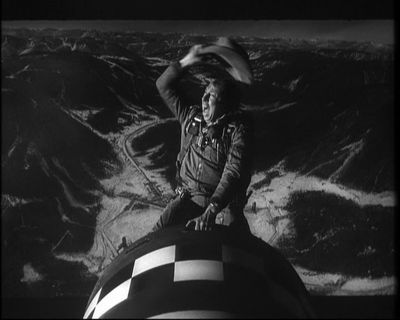
Now, I got a lot of crap from my friends about how I was stuck in the '90s when I was just post-college, wearing my Dinosaur Jr t-shirt and listening to Sonic Youth's Dirty 'cause it was sassy, maaaan. (I never did that last one). But that's what I knew and liked at that point, a line of taste that had been established only 5 years prior, but even by that point they were the "good old days". Who gives a fuck about the merits of the goddamn Smashing Pumpkins if you're worried about getting blowed up all the time? Our leader (ostensibly Slim Pickens from Dr. Strangelove) was reacting to the biggest attack on the U.S. since Pearl Harbor or earlier by waging TWO wars (can't say he wasn't ambitious)... suddenly our thoughts on the potential drug metaphors of H.R. Pufnstuf seemed a whole lot less important.
There was a gap where we were all freaked out, and when the dust settled, we young people found ourselves on either side of a large cultural divide. There were those who were old enough to entrench themselves, and those young enough to reset. I was on the former team. I have an additional theory that the younger set had their "irony circuits" scrambled in the shakeup as well, their "irony training" was disrupted prematurely. I understood the humor and culture jamming when I saw Adam Yauch in a Madonna t-shirt. Yauch was a former punk rocker turned rapper, Madonna was the queen of plastic pop in the 80s. Yes, recontextualization was fun, playing with semiotics was a good laugh, but this group (I say "younger", but it's a mental thing, I guess) ended up taking a lot of this at face value, scrambling the point. I see Rivers Cuomo extolling the virtues of Def Leppard, the first level I get is "he's talking about a crappy hair metal band, but he's in a catchy alternative band. That juxtaposition is ironic." The second layer below that is I happen to know that Cuomo, in his teen years, was actually a big metal fan. OK, even another interesting layer. But what I don't do is hear that and say "Rivers thinks Def Leppard is awesome. I like Weezer. Def Leppard must be awesome." Simplistic thinking like that is why we have people who have tricked themselves into liking crap like Journey. But the difference and value of being attracted to something directly vs. a few levels removed is another discussion.
My point is that after the dust settled (sorry), while amateur ironists and pop culture archivists like myself put that stuff on the shelf for a while. Other things took precedence, like being in our 20s and not being blown up on a plane. Things got grim. Things went from the kaleidoscopic Beastie Boys to the Ballardian imagery of Radiohead. Everyone said that OK Computer was ahead of its time. They were 5 years right. The first half of the decade, to me, sounded like a coma patient hooked up to a frayed wire, making it twitch. Whatever I listened to (especially older music) sounded like a dusty dream from the past, like finding a photo album in the attic. How could I listen to Pet Sounds in the intended way when we could all die at any moment? The navel-gazing anxiety of Death Cab For Cutie and Spoon seemed far more solipsistically appropriate for the moment than anything else, and even the larger-than-life stuff went from celebration to redemption as Coldplay, Travis, and their ilk flourished, while granddaddys U2 left behind their most interesting experimental phase (Achtung Baby - Pop)to reclaim their throne of overbearing, pandering Epic Rock... that I thought they realized better after Rattle & Hum.
And now I'm a relic. Most of my cultural peers, who were a little older than me, are now occupied with kids, careers, families. They'll occasionally pull out their LP copy of Check Your Head or Emperor Tomato Ketchup, but that's about it. I don't often connect culturally to my peers, due to my dislike of Dave Matthews and today's indie rock. And I'm starting to slip gently into that point where everyone more than 3 years younger than me is an idiot with terrible taste. I don't give a fuck about American Idol, and I sure don't care about this Lady Gaga crap (shitty dance pop is shitty dance pop). So what now?
I don't know. Does it matter? It's only pop music...

Showing posts with label rock cycle. Show all posts
Showing posts with label rock cycle. Show all posts
Friday, March 26, 2010

Friday, January 23, 2009
Whatever Happened To My Rock And Roll?
For years, I've espoused (to anyone who will listen) that rock music , and even 20th Century Popular music before that, is a cyclical beast. You see, whenever the tenor of popular music becomes too "pop" (for the purposes of this piece, "pop" is defined as a watered down product, essentially rock music with all the sexuality and below-the-waist drive taken out. Something that you could listen to with your grandmother and she wouldn't be too offended).
For instance...
Jump-band boogie begat easy listening versions of the big bands. Once things got too tame, some young buck like Sinatra or Deano comes in and gives things a kick in the ass. Sure enough, from their crystal towers in the Palace, they lose touch with what makes the young girls scream, and sure enough (again), Elvis comes along with his wild yowl and swivelling hips to make people freak out once more. But after the army and the Colonel and the price of fame get their hands on Elvis, he's neutered - a pale imitation of what once was. Before long, you have Pat Boone trying to keep up with whitebread versions of "Long Tall Sally", Patti Page asking about pet supplies, and by the early '60s, rock and roll needs the British to come bail it out. Things get wild, haircuts are once again dangerous, all is right with the world.
But, despite the Beatles' creative exploration of the rock and roll form, by their fourth album, there ain't a whole lot that reminds us of the "black leather 'n' speed" Silver Beetles that got their start in Hamburg and the Cavern Club. But things were riding high by that point, and the newly progressive mentality of the nation's youth remained dangerous to authority, even if the music was more of a conceptual threat than a visceral one. The great records of '66-'67 (Aftermath, Pet Sounds, Sgt. Pepper's, et al.) were frightening enough to the squares that they didn't necessarily need to blast anyone's eardrums out, they could still blow minds. Plus, if you really wanted to find some racket, you could dig through the cutout singles bin and find any of the bands that Lenny Kaye put on Nuggets a few years later. Your Count Five, Electric Prunes, Seeds, Standells, Sonics, and their ilk were certainly more than raucous enough to keep some ears bleeding.
By '70, things were getting progressively lame again (in every way you care to decipher that pun). Sure, there were isolated pockets of spit-in-your-eye activity (Detroit, the Lower East Side of Manhattan), and fluke successes (the Dolls, MC5, even Alice Cooper's first few records) that were just raw enough to let people know that there was still some energy floating around, but not too much, since the "big guitar" sound had been co-opted by bands that kept the signifiers of the rebellion, but not much of the spirit. Sure, Led Zeppelin had loud guitars and lyrics about sex and yelling vocals (yeah, that's what Plant did - he yelled. Please come to grips with that), but Led Zep wasn't really what the whole teenagge rebellion thing was about. Zep was music made by adults for an adult audience. People that could drive to the burbs to see their shows, and hey, maybe afford a few 'luudes too! It wasn't until about '75 or '76 that the whole punk thing happened and kinda reset things. It lasted for a burst, then influenced the whole New Wave thing, which was like a first generation cassette dub, but that begat synth-pop, and we're getting thin again. Once New Wave kicked into the headlines, the real stuff went underground, and while it begat a whole buncha cool stuff during the '80s, none of it scraped the charts. Grunge in the States and the first wave of Britpop in the UK brought back snotty youngsters with loud guitars, and while it could be argued that both sides were just trading in the bloated AOR excesses of the mid-'70s, there was some genuine rock'n'roll rebellion coming from the likes of Nirvana, Mudhoney, Blur, Suede, etc. Sure, Pearl Jam and Soundgarden were my generation's Grand Funk Railroad and Black Sabbath, and Oasis were just the Faces Redux (with Blur aping the Kinks), but the Gallagher brothers seemed genuinely reckless, and it all had some energy, even if it was self-destructive a lot of the time, at least people were DOING something.
By '95, the status quo was bands, once-removed from grunge, swimming in the newly opened marketplace, after the record companies realized that they didn't know what people wanted. Remember the Presidents Of The United States Of America? Weirdos from Seattle with 5 guitar strings between two guitars singing short punky songs about dune buggies? But it was poppier, and No Doubt with their New Wave revivalism, Garbage with their hyper-slick take on synth-punk, and the oddball deadpan of Cake were like the New Wave Of New Wave, unlike whatever movement it was that the Brit weeklies once christened the New Wave Of New Wave. Ugh. After that, we hit the teen-pop boom, this cycle's version of Debbie Gibson and Tiffany and New Kids On The Block, which was just the last cycle's version of prefab pap pop like Fabian and Annette Funicello or even Shaun Cassidy or something.
So here we are, stuck waiting for the next big rock and roll revival, being held over by scraps (albeit delicious ones) like the early '00s garage revival of the White Stripes (the weirdest success story I can think of right now) and the Strokes (overrated but enjoyable). But these still feel like flukes, like more successful versions of the Dolls and early Cheap Trick and (if you're British) Roxy Music and Mott The Hoople. I love the White Stripes, but they're so distinctive sonically that they couldn't possibly be the figureheads of a movement. We need a full-on, united front, back-to-sweat rock 'n' roll revolution revival!
But what if this revival never comes?
The big concept that this whole cycle theory is built around is the complete inablity of the major label record industry to realize what people are wanting, then jumping on a prexisting trend and exploiting it to drain all possible profit, then finding another trend. And I don't mean that as a judgement. It's a fact that's been proven time and time again. Really. The Beatles pointed it out in A HARD DAY'S NIGHT, and the idea of Big (Media) Business having to completely readjust when something comes out of left field and then focusing on NOTHING BUT and trying to cram that down the holdouts' throats is not an idea that I think anyone can still argue with in this day and age. I remember a car commercial in about '94 that had a character that they redressed, giving him the whole "grunge" thing. But when a new generation of consumers, today's 13-16 year olds, barely remember a day and age before downloading and instant access to any given song (forget whole ALBUMS!), the rock and roll instinct has very little in the way of a given place to go when it's time for a reset. We can hardly have a Rock And Roll Revival (TM) when I can't think of a decent place to stage the revolution. For the forseeable future, American Idol will still sell ringtones, Idol graduates and the runners up can rule the charts, and people are going to stick with the same road-tested icons that have been around for almost ten years now. Who could possibly have predicted that Britney Spears could be milking fame for seven albums now? The biggest controversy in recent weeks has been her new song "If You Seek Amy" ("F.U.C.K. Me" - get it?), which was cute when the Poster Children put "If You See Kay" on 1990's Daisychain Reaction. The only dangerous presence in the mainstream marketplace is Kanye West, and he's got "lone gunman" written all over him. These days, people can start releasing the most badass, hot-rod-rock'n'roll records on major labels, but it will hardly matter, since The Youth, which buys all the music, hardly even buys a whole album anymore. And why should they, when they can get just the song they want (any of them, not just the one that they're told is "the hit" and is sold to them in a 3-part extended CD single) for less than a dollar?
I've recently had to resign myself to the fact that I'm not a young guy anymore. I'm certainly no dinosaur, but I'm in a new demographic. I'm not a targeted consumer. And I'm OK with that. I like what I like, and frankly, I was getting sick of being expected to like the "new thing" anyway.
"I used to be with it. But then they changed what "it" was. Now what I'm with isn't "it", and what's "it" seems weird and scary to me.' - Abraham Simpson
How is rock and roll going to come back now? Could the revolution be in the medium itself? Radiohead releases an album letting people pay what they want and it's all people can talk about all year. I thought it was a cool way to deliver a decent record. It wasn't necessarily meant as a statement (if you believe what the band claims), but maybe it was a statement nonetheless. Marshall McLuhan's concept of the "the medium is the message" perfectly exemplified. Frankly, I'm not a terribly big fan of Radiohead anymore. They make good records, but I liked them when they were more song and guitar based (see previous paragraph). However, there's no way I can't deny that doing what they did, especially if it was "just because", not "let's make a sweeping statement", was the most rock and roll thing about them in years. And it was pretty damn "punk rock". "Forget the record company, let's let them lose money, let's just get our fans our music."
If you want loud guitars and snarling vocals, in this wonderful information age, there's no shortage of places to get it. I can think of any number of great labels putting out everything from garage rock to punk blues to rockabilly to modern (non-shitty) just-plain-hard-rock. Punch "garage rock" or "punk" into MySpace of Facebook and watch the results roll in. Fuzz boxes and thinly veiled sexual metaphors are not in short supply. However, in the main artery of popular culture, maybe rock and roll isn't about music anymore. Subversion is sexy, revolution is dangerous. Maybe my cyclical chart missed a mark, and the emergence of the post-hardcopy digital age is the next punk rock.
Of course, I still hope I'm wrong, and that next year, popular music blows my mind.
For instance...
Jump-band boogie begat easy listening versions of the big bands. Once things got too tame, some young buck like Sinatra or Deano comes in and gives things a kick in the ass. Sure enough, from their crystal towers in the Palace, they lose touch with what makes the young girls scream, and sure enough (again), Elvis comes along with his wild yowl and swivelling hips to make people freak out once more. But after the army and the Colonel and the price of fame get their hands on Elvis, he's neutered - a pale imitation of what once was. Before long, you have Pat Boone trying to keep up with whitebread versions of "Long Tall Sally", Patti Page asking about pet supplies, and by the early '60s, rock and roll needs the British to come bail it out. Things get wild, haircuts are once again dangerous, all is right with the world.
But, despite the Beatles' creative exploration of the rock and roll form, by their fourth album, there ain't a whole lot that reminds us of the "black leather 'n' speed" Silver Beetles that got their start in Hamburg and the Cavern Club. But things were riding high by that point, and the newly progressive mentality of the nation's youth remained dangerous to authority, even if the music was more of a conceptual threat than a visceral one. The great records of '66-'67 (Aftermath, Pet Sounds, Sgt. Pepper's, et al.) were frightening enough to the squares that they didn't necessarily need to blast anyone's eardrums out, they could still blow minds. Plus, if you really wanted to find some racket, you could dig through the cutout singles bin and find any of the bands that Lenny Kaye put on Nuggets a few years later. Your Count Five, Electric Prunes, Seeds, Standells, Sonics, and their ilk were certainly more than raucous enough to keep some ears bleeding.
By '70, things were getting progressively lame again (in every way you care to decipher that pun). Sure, there were isolated pockets of spit-in-your-eye activity (Detroit, the Lower East Side of Manhattan), and fluke successes (the Dolls, MC5, even Alice Cooper's first few records) that were just raw enough to let people know that there was still some energy floating around, but not too much, since the "big guitar" sound had been co-opted by bands that kept the signifiers of the rebellion, but not much of the spirit. Sure, Led Zeppelin had loud guitars and lyrics about sex and yelling vocals (yeah, that's what Plant did - he yelled. Please come to grips with that), but Led Zep wasn't really what the whole teenagge rebellion thing was about. Zep was music made by adults for an adult audience. People that could drive to the burbs to see their shows, and hey, maybe afford a few 'luudes too! It wasn't until about '75 or '76 that the whole punk thing happened and kinda reset things. It lasted for a burst, then influenced the whole New Wave thing, which was like a first generation cassette dub, but that begat synth-pop, and we're getting thin again. Once New Wave kicked into the headlines, the real stuff went underground, and while it begat a whole buncha cool stuff during the '80s, none of it scraped the charts. Grunge in the States and the first wave of Britpop in the UK brought back snotty youngsters with loud guitars, and while it could be argued that both sides were just trading in the bloated AOR excesses of the mid-'70s, there was some genuine rock'n'roll rebellion coming from the likes of Nirvana, Mudhoney, Blur, Suede, etc. Sure, Pearl Jam and Soundgarden were my generation's Grand Funk Railroad and Black Sabbath, and Oasis were just the Faces Redux (with Blur aping the Kinks), but the Gallagher brothers seemed genuinely reckless, and it all had some energy, even if it was self-destructive a lot of the time, at least people were DOING something.
By '95, the status quo was bands, once-removed from grunge, swimming in the newly opened marketplace, after the record companies realized that they didn't know what people wanted. Remember the Presidents Of The United States Of America? Weirdos from Seattle with 5 guitar strings between two guitars singing short punky songs about dune buggies? But it was poppier, and No Doubt with their New Wave revivalism, Garbage with their hyper-slick take on synth-punk, and the oddball deadpan of Cake were like the New Wave Of New Wave, unlike whatever movement it was that the Brit weeklies once christened the New Wave Of New Wave. Ugh. After that, we hit the teen-pop boom, this cycle's version of Debbie Gibson and Tiffany and New Kids On The Block, which was just the last cycle's version of prefab pap pop like Fabian and Annette Funicello or even Shaun Cassidy or something.
So here we are, stuck waiting for the next big rock and roll revival, being held over by scraps (albeit delicious ones) like the early '00s garage revival of the White Stripes (the weirdest success story I can think of right now) and the Strokes (overrated but enjoyable). But these still feel like flukes, like more successful versions of the Dolls and early Cheap Trick and (if you're British) Roxy Music and Mott The Hoople. I love the White Stripes, but they're so distinctive sonically that they couldn't possibly be the figureheads of a movement. We need a full-on, united front, back-to-sweat rock 'n' roll revolution revival!
But what if this revival never comes?
The big concept that this whole cycle theory is built around is the complete inablity of the major label record industry to realize what people are wanting, then jumping on a prexisting trend and exploiting it to drain all possible profit, then finding another trend. And I don't mean that as a judgement. It's a fact that's been proven time and time again. Really. The Beatles pointed it out in A HARD DAY'S NIGHT, and the idea of Big (Media) Business having to completely readjust when something comes out of left field and then focusing on NOTHING BUT and trying to cram that down the holdouts' throats is not an idea that I think anyone can still argue with in this day and age. I remember a car commercial in about '94 that had a character that they redressed, giving him the whole "grunge" thing. But when a new generation of consumers, today's 13-16 year olds, barely remember a day and age before downloading and instant access to any given song (forget whole ALBUMS!), the rock and roll instinct has very little in the way of a given place to go when it's time for a reset. We can hardly have a Rock And Roll Revival (TM) when I can't think of a decent place to stage the revolution. For the forseeable future, American Idol will still sell ringtones, Idol graduates and the runners up can rule the charts, and people are going to stick with the same road-tested icons that have been around for almost ten years now. Who could possibly have predicted that Britney Spears could be milking fame for seven albums now? The biggest controversy in recent weeks has been her new song "If You Seek Amy" ("F.U.C.K. Me" - get it?), which was cute when the Poster Children put "If You See Kay" on 1990's Daisychain Reaction. The only dangerous presence in the mainstream marketplace is Kanye West, and he's got "lone gunman" written all over him. These days, people can start releasing the most badass, hot-rod-rock'n'roll records on major labels, but it will hardly matter, since The Youth, which buys all the music, hardly even buys a whole album anymore. And why should they, when they can get just the song they want (any of them, not just the one that they're told is "the hit" and is sold to them in a 3-part extended CD single) for less than a dollar?
I've recently had to resign myself to the fact that I'm not a young guy anymore. I'm certainly no dinosaur, but I'm in a new demographic. I'm not a targeted consumer. And I'm OK with that. I like what I like, and frankly, I was getting sick of being expected to like the "new thing" anyway.
"I used to be with it. But then they changed what "it" was. Now what I'm with isn't "it", and what's "it" seems weird and scary to me.' - Abraham Simpson
How is rock and roll going to come back now? Could the revolution be in the medium itself? Radiohead releases an album letting people pay what they want and it's all people can talk about all year. I thought it was a cool way to deliver a decent record. It wasn't necessarily meant as a statement (if you believe what the band claims), but maybe it was a statement nonetheless. Marshall McLuhan's concept of the "the medium is the message" perfectly exemplified. Frankly, I'm not a terribly big fan of Radiohead anymore. They make good records, but I liked them when they were more song and guitar based (see previous paragraph). However, there's no way I can't deny that doing what they did, especially if it was "just because", not "let's make a sweeping statement", was the most rock and roll thing about them in years. And it was pretty damn "punk rock". "Forget the record company, let's let them lose money, let's just get our fans our music."
If you want loud guitars and snarling vocals, in this wonderful information age, there's no shortage of places to get it. I can think of any number of great labels putting out everything from garage rock to punk blues to rockabilly to modern (non-shitty) just-plain-hard-rock. Punch "garage rock" or "punk" into MySpace of Facebook and watch the results roll in. Fuzz boxes and thinly veiled sexual metaphors are not in short supply. However, in the main artery of popular culture, maybe rock and roll isn't about music anymore. Subversion is sexy, revolution is dangerous. Maybe my cyclical chart missed a mark, and the emergence of the post-hardcopy digital age is the next punk rock.
Of course, I still hope I'm wrong, and that next year, popular music blows my mind.
Subscribe to:
Posts (Atom)